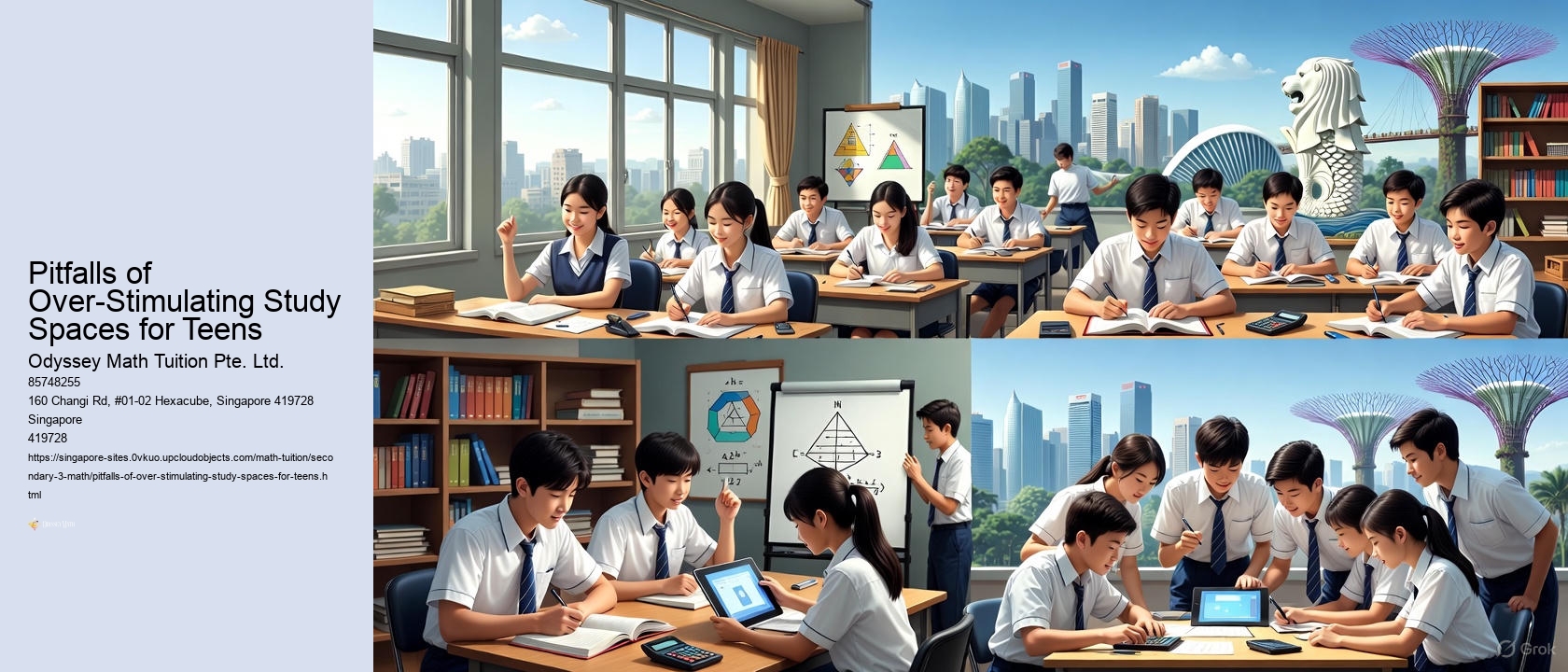
Okay, lah, parents and Sec 3 students! Let's talk about study spaces. You think the more atas (high-class) and decked out your study corner is, the better your Math grades will be? Think again! Sometimes, all that "perfection" can backfire, especially when you're trying to conquer those crucial Secondary 3 Math exams. In today's fast-paced educational landscape, many parents in Singapore are looking into effective methods to boost their children's grasp of mathematical principles, from basic arithmetic to advanced problem-solving. Building a strong foundation early on can greatly improve confidence and academic performance, helping students handle school exams and real-world applications with ease. For those investigating options like secondary 3 math it's essential to prioritize on programs that emphasize personalized learning and experienced guidance. This strategy not only resolves individual weaknesses but also fosters a love for the subject, contributing to long-term success in STEM-related fields and beyond.. We're talking about the allure and illusion of 'perfect' study spaces.
You know, it's an interesting fact that many top Math students throughout history studied in surprisingly simple environments. No fancy gadgets, just focused minds!
Pitfalls of Over-Stimulating Study Spaces for Teens
So, what's the problem with these "perfect" study spaces?
Sensory Overload: Imagine this: bright lights, colourful posters, motivational quotes plastered everywhere, the latest gadgets blinking... Your brain is working overtime just processing all the visual noise, leaving less mental bandwidth for those challenging algebra equations or geometry proofs. It's like trying to find the MRT station during peak hour – too much happening!
Distraction Central: That super-cool gaming setup right next to your textbooks? Tempting, isn't it? A study space that's also a play space is a recipe for procrastination. Every notification ping, every flashing light, pulls your attention away from the task at hand. Say bye-bye to focused study sessions!
In the challenging world of Singapore's education system, parents are increasingly intent on preparing their children with the competencies essential to succeed in intensive math syllabi, encompassing PSLE, O-Level, and A-Level exams. Spotting early indicators of challenge in areas like algebra, geometry, or calculus can create a world of difference in developing tenacity and proficiency over complex problem-solving. Exploring trustworthy math tuition Singapore options can provide customized guidance that aligns with the national syllabus, ensuring students acquire the advantage they need for top exam scores. By emphasizing engaging sessions and steady practice, families can support their kids not only achieve but go beyond academic standards, paving the way for future possibilities in competitive fields..
The Illusion of Productivity: A perfectly organized desk, colour-coded notes, and a fancy ergonomic chair look productive, but they don't guarantee actual learning. It's easy to get caught up in the appearance of studying, without actually engaging with the material. Don't just chope (reserve) your study spot; actually use it!
Anxiety Amplifier: For some students, a perfectly curated study space can actually increase anxiety. The pressure to maintain that "perfect" image can be overwhelming, leading to stress and hindering their ability to focus. Remember, it's about progress, not perfection.
Creating a Conducive Study Environment
So, how do you create a study space that actually helps you excel in Singapore Secondary 3 Math? Here are some tips to help you how to excel in singapore secondary 3 math, secondary 3 math tuition tips:
Minimize Distractions: This is rule number one! Find a quiet space, away from noise and interruptions. Turn off notifications on your phone and computer (unless you need them for studying, of course!), or use website blockers to avoid temptation.
Keep it Simple: A clean, uncluttered desk is your best friend. Only keep the materials you need for your current task within reach. Less is more!
Personalize, But Don't Overdo It: A few personal touches can make your study space feel more comfortable and inviting, but avoid overwhelming it with decorations. A plant, a favorite photo, or a calming scent can be nice additions.
Optimize Lighting and Ergonomics: Good lighting is essential for preventing eye strain and fatigue. Natural light is ideal, but if that's not possible, use a desk lamp with a bright, white light. Make sure your chair and desk are at the right height to promote good posture.
Regular Breaks: Get up and move around every hour or so to prevent burnout and maintain focus. A quick walk, some stretching, or a short chat with a family member can do wonders.
The Importance of Natural Light: Studies have shown that natural light can improve mood, focus, and productivity. Try to position your study space near a window if possible. Even a few minutes of sunlight exposure each day can make a big difference.
The Power of Plants: Indoor plants can help purify the air, reduce stress, and create a more calming atmosphere. Choose low-maintenance plants that are easy to care for.
Remember, parents, the goal isn't to create a "perfect" study space, but rather a functional and supportive environment that helps your child focus, learn, and succeed in their Secondary 3 Math exams. It's about finding what works best for them, not what looks best on Instagram.
Fun fact: Did you know that some of the most famous mathematicians throughout history preferred to work in messy, chaotic environments? Albert Einstein's desk, for example, was notoriously cluttered! The key is to find a system that works for you, even if it doesn't make sense to anyone else.
And students, don't be afraid to experiment and find what works best for you. In this nation's challenging education framework, parents perform a vital function in leading their children through key assessments that form academic futures, from the Primary School Leaving Examination (PSLE) which examines fundamental competencies in areas like math and scientific studies, to the GCE O-Level exams emphasizing on high school expertise in multiple disciplines. As students move forward, the GCE A-Level examinations necessitate deeper logical capabilities and discipline proficiency, frequently deciding higher education placements and professional paths. To keep knowledgeable on all facets of these national evaluations, parents should investigate authorized materials on Singapore test papers offered by the Singapore Examinations and Assessment Board (SEAB). This secures access to the latest programs, test schedules, sign-up details, and guidelines that match with Ministry of Education criteria. Consistently referring to SEAB can assist households plan effectively, minimize ambiguities, and support their kids in achieving top outcomes during the competitive scene.. After all, your study space should be a reflection of your individual learning style and preferences. Good luck with your studies, and remember to relax and enjoy the process! 加油 (jia you - add oil)!
How can I tell if my teens study space is too stimulating?
Watch for signs like difficulty focusing, restlessness, increased procrastination, or complaints of feeling overwhelmed.
What are some common sources of over-stimulation in a study space?
Common culprits include excessive noise, bright or flashing lights, cluttered surfaces, and constant notifications from electronic devices.
Should I completely eliminate all distractions from my teens study area?
While minimizing distractions is important, a completely sterile environment can also be demotivating. Aim for a balance that reduces over-stimulation without making the space feel unwelcoming.
What kind of lighting is best for a study space?
Natural light is ideal, but if thats not possible, opt for balanced, full-spectrum lighting that mimics daylight to reduce eye strain and improve focus.
How can I help my teen organize their study space to minimize clutter?
Provide storage solutions like shelves, drawers, or bins. Encourage them to declutter regularly and only keep essential materials within reach.
What role does colour play in creating a calming study environment?
Opt for calming colours like blues, greens, or neutral tones. Avoid bright, intense colours that can be distracting or agitating.
My teen says they study best with music. Is that okay?
Some students find music helpful, but it depends on the type of music and the individual. Suggest instrumental or ambient music without strong lyrics, and encourage them to experiment to see what works best.
Should my teen study in their bedroom?
It depends on the individual. If their bedroom is free from distractions and they can focus there, it can be a suitable space. However, if their bedroom is associated with relaxation and sleep, it might be better to find a dedicated study area elsewhere.
How can I involve my teen in creating a study space that works for them?
Ask for their input on what helps them focus and what distracts them. Collaborate on organizing and decorating the space to make it a comfortable and productive environment.